a hundred years
1917 → 2026, at three pixels a year
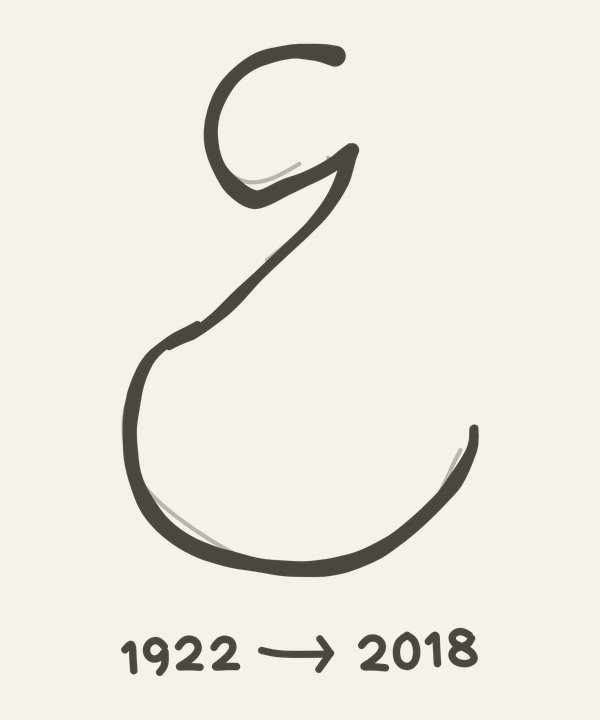
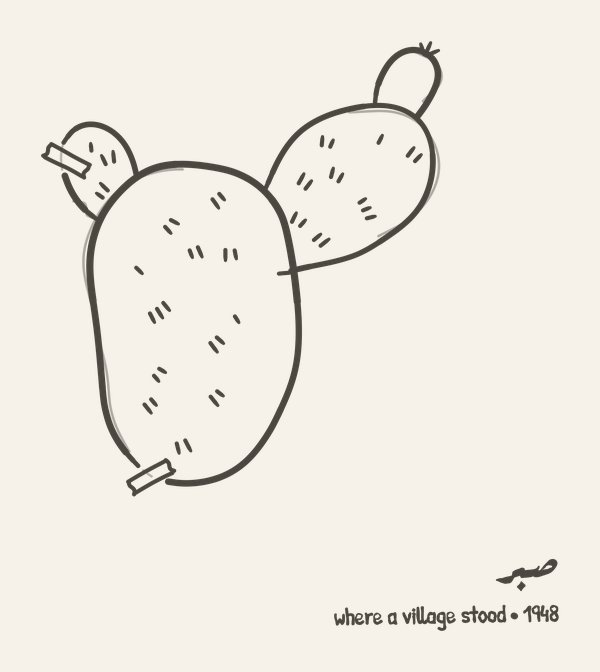
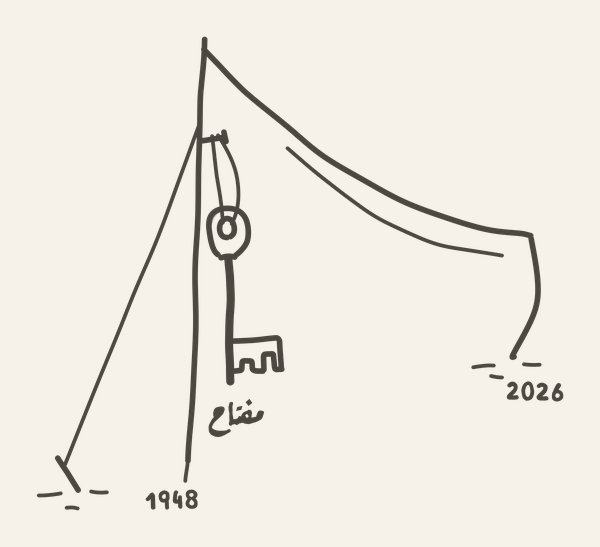
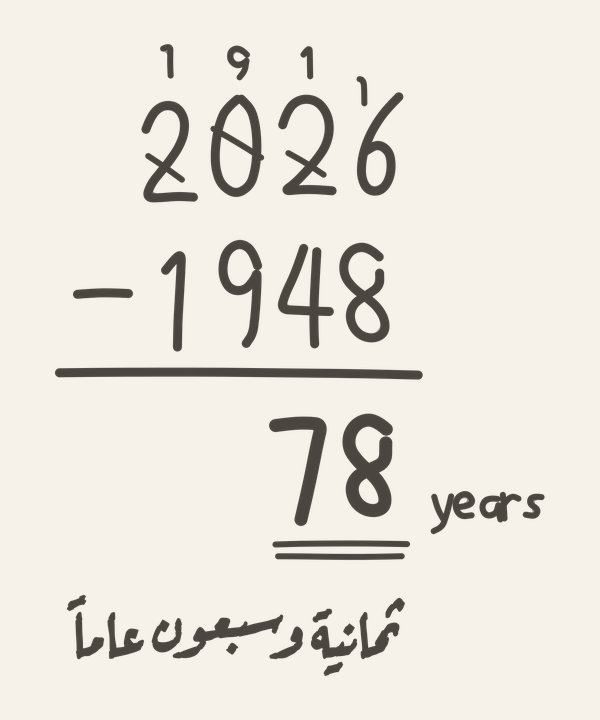
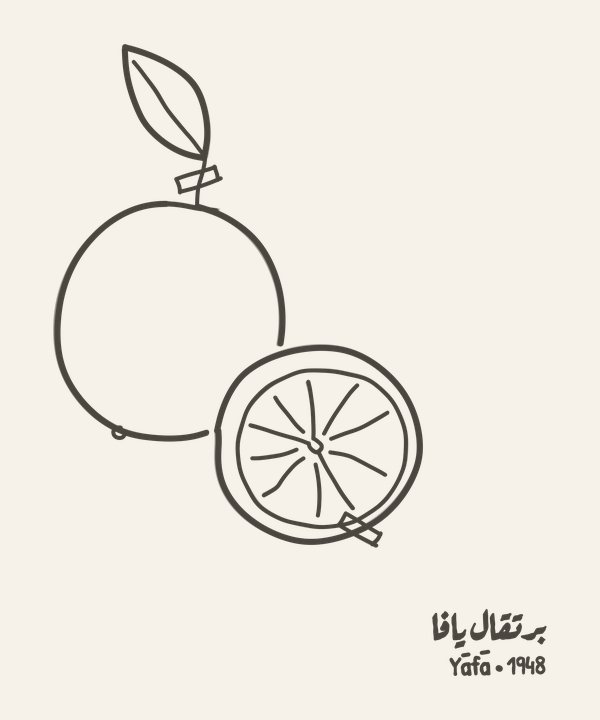
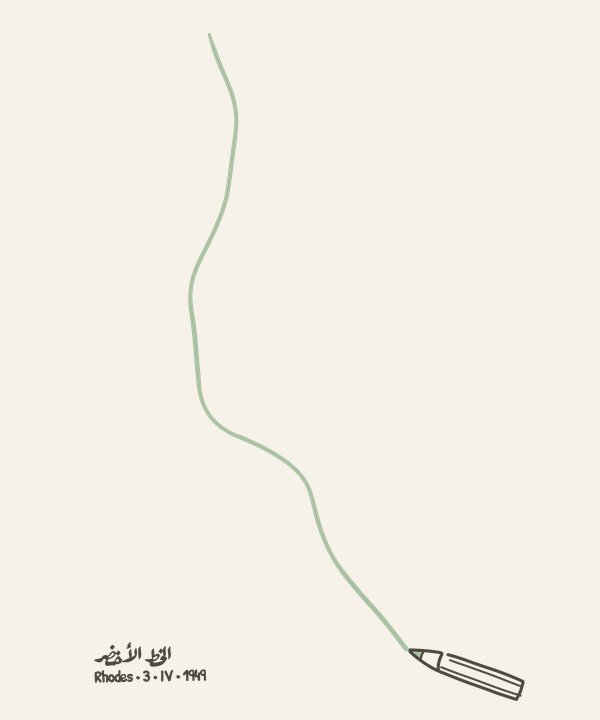
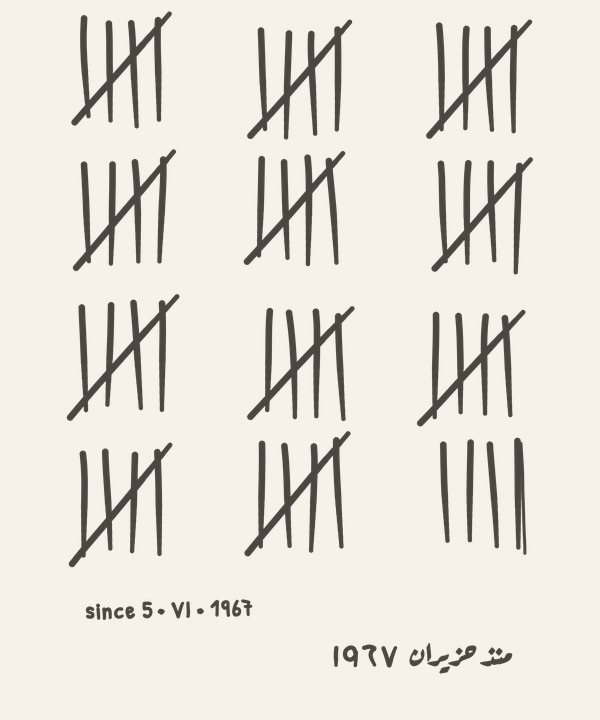
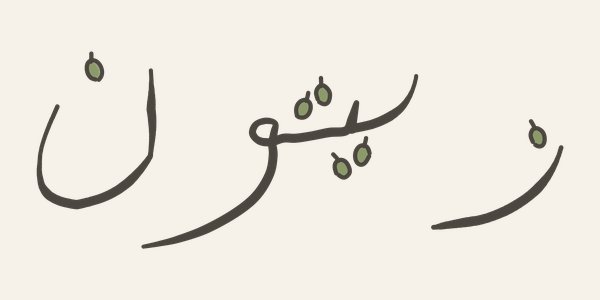
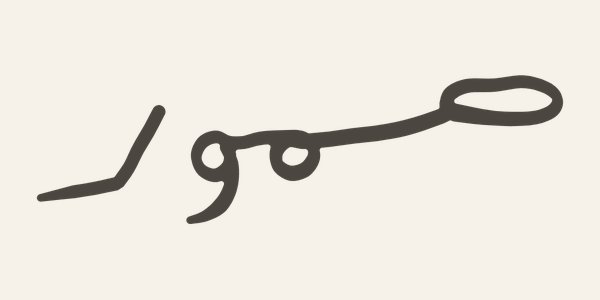
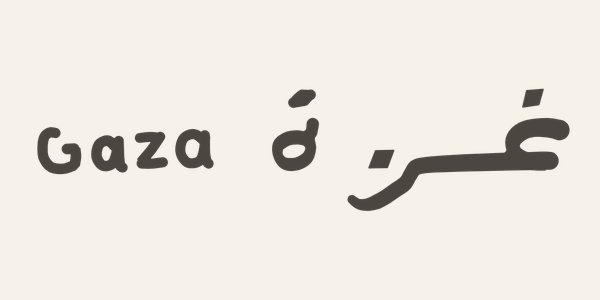
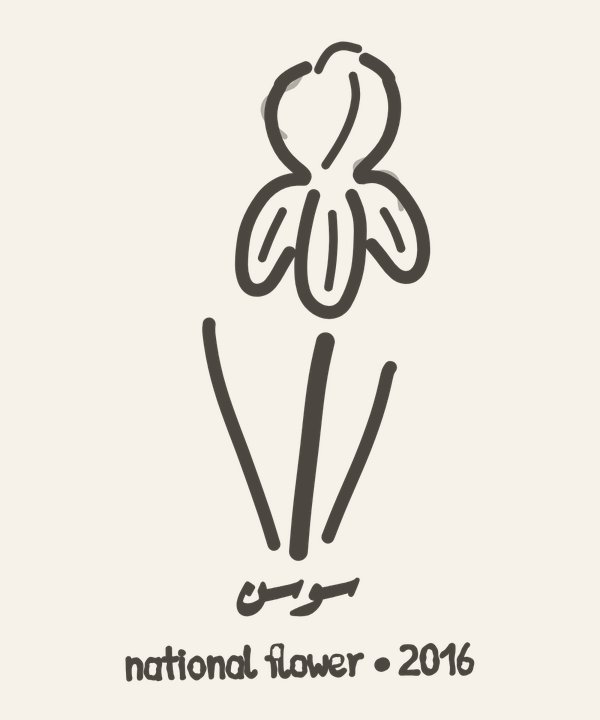
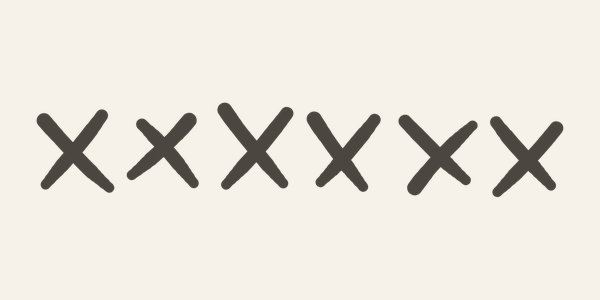
This is the story the drawings come from, told once, in full, and never on the cloth. It begins on 2 November 1917, with a 67-word letter, and it runs to today. It is a line, because a hundred years is a length. Each event on it is two neutral sentences and a link to where we read them. The drawings hang from the line at their dates: the cactus, the key, the sum and the orange at 1948; the green pencil at 1949; the tallies, the olive and the word for staying at 1967; one letter at 1922 and again at 2018; the iris at 2016; the six crosses at 2021; the sleeve at 2007; the key again, on a tent pole, at 2026.
 11
11
 01
01
 02
02
 05
05
 10
10
 03
03
 04
04
 06
06
 09
09
 13
13
 12
12
 14
14
1917 at the top, today at the bottom — three pixels a year · the line is drawn at once; motion is off in your settings
how to read the line
The line is ruled by hand from top to bottom at three pixels a year, 1917 at the top, today at the bottom. It grows when the page opens, the way a count does; if your settings ask for less motion it is simply there. A short tick is an event. A longer tick is a decade. Where a drawing is pinned you see it small, on paper, with its number; the number opens the drawing's page. Dates are written day, month, year, and kept in that order in both languages.
Two words appear on this page and nowhere else on the site. Intifada appears as a dated noun — the first, from 9 December 1987 to 1993; the second, from 28 September 2000 to about 2005 — because that is what the two uprisings are called, and a history page should call things by their names. Genocide appears only as a finding attributed to the body that made it: on 16 September 2025 the UN Independent International Commission of Inquiry concluded that Israel has committed genocide in Gaza [1]; the International Court of Justice, the only court that can rule on a state's responsibility, has not yet given judgment in South Africa v. Israel, having found the claim plausible in January 2024 [2]; Israel, the United States and Germany reject the term. We report the finding and who made it. We do not print the word on cloth.
contested figures
Where sources disagree about a number, the line shows the range and says who counts what, and we do not choose for you. The refugees of 1948 are 726,000 by the UN Conciliation Commission's count and 700,000–750,000 by most historians' [3]; the depopulated villages are 418 in Walid Khalidi's standard list [4] and around 600 in the Zochrot database [5]. The dead of Gaza since October 2023 are counted by the Gaza Ministry of Health — 73,910 as of 19 September 2026 [6] — and that count is the one the UN and the WHO use, while independent verification puts the figure higher [7] and Israeli officials dispute the share of civilians. A number on this page is always attributed and dated. A number that changes daily is never on a garment.
sourcing note
Every entry on the line links to a primary source where one exists — the text of a resolution, the court's own page, the agency's own figures — and to an encyclopaedia or press account where it helps to cross-check. Entries are taken from our own research file, compiled on 20 September 2026 and re-verified before each print run. Everything about 2026 is provisional. If you find an error, write to us; we will correct the line and note the correction here.
the events
- 1910s
-
Balfour Declaration
A 67-word letter from British Foreign Secretary Arthur Balfour to Lord Rothschild states that the government views with favour the establishment in Palestine of a national home for the Jewish people, while nothing shall be done to prejudice the civil and religious rights of existing non-Jewish communities in Palestine. About nine in ten of Palestine's people were then Arab.
contested figure — shown as a range The population share (about 90 % Arab, 8–10 % Jewish in 1917–18) is an estimate from British and Ottoman census reconstruction.
source: Balfour Declaration — text (Yale Avalon) · un.org/unispal/history/
- 1920s
-
San Remo conference
The San Remo conference allocates Palestine to Britain as a mandate.
-
British Mandate for Palestine
The League of Nations Council approves the Mandate text, incorporating the Balfour Declaration in its preamble. It enters into force on 29 September 1923.
source: Mandate for Palestine — text (Yale Avalon) · en.wikipedia.org/wiki/Mandate_for_Palestine
-
Western Wall / al-Buraq disturbances
A week of intercommunal violence sparked by disputes over access at the Western Wall / al-Buraq. The Shaw Commission counted 133 Jews and 116 Arabs killed, the latter mostly by British police.
source: 1929 Palestine riots — overview (Shaw Commission figures) · un.org/unispal/history/
- 1930s
-
Great Palestinian Revolt and the six-month general strike
A nationwide Arab general strike from April to October 1936 — about six months, one of the longest general strikes recorded — is followed by armed revolt until 1939; British suppression involves collective punishment and house demolitions. The Peel Commission (1937) first proposes partition; the 1939 White Paper limits Jewish immigration.
contested figure — shown as a range Palestinian deaths: 3,000–6,000 (Walid Khalidi about 5,000; British official counts lower). We write «thousands».
source: 1936–1939 Arab revolt in Palestine — overview · en.wikipedia.org/wiki/Peel_Commission · un.org/unispal/history/
- 1940s
-
UN General Assembly Resolution 181 — the Partition Plan
The General Assembly votes 33–13–10 to partition Palestine into a Jewish state on just over half the land, an Arab state, and an international zone for Jerusalem. Arab states and the Palestinian leadership reject it; civil war begins.
contested figure — shown as a range Land share of the proposed Jewish state 55–56 % depending on whether lakes are counted; Jewish land ownership at the time about 6–7 % (sources 5.8–8 %).
source: UNGA Resolution 181 (II) — text (UNISPAL) · digitallibrary.un.org/record/210758 · en.wikipedia.org/wiki/United_Nations_…
-
Deir Yassin
Irgun and Lehi fighters attack the village of Deir Yassin west of Jerusalem; around a hundred villagers are killed. The massacre becomes a driver of flight elsewhere.
contested figure — shown as a range Contemporary reports said 254; later research (Kanaana and Zeitawi, Birzeit 1987: 107; Israeli historians) puts it at 100–120.
source: Deir Yassin massacre — overview (Birzeit study: 107 killed) · palquest.org/en/highlight/160/nakba
-
End of the Mandate · declaration of Israel · the Nakba
The Mandate ends at midnight on 14 May; Israel declares independence; neighbouring Arab states enter the war on 15 May. Between December 1947 and 1949 roughly 700,000–750,000 Palestinians — about half the Arab population of Mandate Palestine — are expelled or flee and are not allowed to return, and some 400–600 towns and villages are depopulated and mostly destroyed.
contested figure — shown as a range Refugees: UN Conciliation Commission 726,000; British Foreign Office 711,000–810,000; Israeli government (1949) 520,000–530,000; historians (Morris, Pappé, Khalidi) 700,000–750,000. Villages: Khalidi 418; Morris about 369–400; Abu Sitta 531 (later 675 incl. hamlets); Zochrot about 600.
source: UNRWA — Palestine refugees · un.org/unispal/document/auto-insert-208294/ · palestine-studies.org/en/node/433548 · zochrot.org · un.org/unispal/nakba75/
-
UN General Assembly Resolution 194 — the right of return
Paragraph 11 resolves that the refugees wishing to return to their homes and live at peace with their neighbours should be permitted to do so at the earliest practicable date, and that compensation should be paid to those choosing not to return. Reaffirmed annually since.
source: UNGA Resolution 194 (III) — text · en.wikipedia.org/wiki/United_Nations_…
-
Armistice agreements — the Green Line
Israel signs armistice lines with Egypt (24 February), Lebanon (23 March), Jordan (3 April, at Rhodes) and Syria (20 July 1949); the lines, drawn in green pencil, become the Green Line. About three-quarters of Mandate Palestine lies inside Israel; Gaza is under Egyptian administration and the West Bank is annexed by Jordan in 1950.
contested figure — shown as a range Israel's share of Mandate Palestine inside the 1949 lines is commonly given as 78 %; some compute 77 %.
-
UNRWA created
General Assembly Resolution 302 (IV) creates the UN Relief and Works Agency for Palestine Refugees, operational from 1 May 1950. Today about 5.9 million registered Palestine refugees live in Gaza, the West Bank, Jordan, Lebanon and Syria.
source: UNGA Resolution 302 (IV) — text (UNRWA) · unrwa.org/who-we-are
- 1950s
-
Kafr Qasim · Khan Yunis
On the first day of the Suez war Israeli Border Police kill 48–49 Arab citizens of Israel returning home to Kafr Qasim after an unannounced curfew. On 3 November Israeli forces occupying Gaza kill some 275 people in Khan Yunis (UNRWA figure); Israel occupies Gaza from November 1956 to March 1957.
contested figure — shown as a range Kafr Qasim 48 or 49 (an unborn child counted by some). Khan Yunis: UNRWA 275; Israel disputes the figure.
source: Kafr Qasim massacre — overview · en.wikipedia.org/wiki/Khan_Yunis_massacre
- 1960s
-
Palestine Liberation Organization founded
The first Palestinian National Council meets in Jerusalem and founds the PLO, adopting the Palestinian National Charter; Ahmad Shukeiri is its first chairman. The Arab League recognises it in 1974 as the sole legitimate representative of the Palestinian people.
source: UN — History of the question of Palestine · en.wikipedia.org/wiki/Palestine_Liber…
-
Six-Day War — the Naksa; occupation begins
Israel captures the West Bank including East Jerusalem, Gaza, Sinai and the Golan; about 300,000 Palestinians are displaced, many for the second time, and the military occupation of the West Bank and Gaza begins — fifty-nine years in 2026. East Jerusalem is placed under Israeli law on 28 June 1967.
contested figure — shown as a range Displacement figures 280,000–325,000.
-
UN Security Council Resolution 242
The Security Council stresses the inadmissibility of the acquisition of territory by war and calls for withdrawal from territories occupied in the recent conflict.
contested figure — shown as a range The missing «the» before «territories» (English versus French text) is a live legal dispute; we print the number, not the wording.
source: UNSC Resolution 242 (1967) — UN Digital Library · en.wikipedia.org/wiki/United_Nations_…
- 1970s
-
Black September in Jordan
Armed confrontation between the Jordanian army and Palestinian guerrilla organisations; thousands are killed. By July 1971 the PLO leadership is expelled from Jordan to Lebanon.
contested figure — shown as a range Deaths estimated at 2,000–3,400 or more; the PLO claimed more.
source: Black September — overview
-
Arafat addresses the UN General Assembly
Yasser Arafat addresses the General Assembly; nine days later Resolution 3236 reaffirms Palestinian self-determination and Resolution 3237 grants the PLO observer status.
source: UNGA Resolutions 3236 and 3237 (UNISPAL) · en.wikipedia.org/wiki/Yasser_Arafat
-
Land Day
Palestinian citizens of Israel strike and march against the expropriation of about 20,000 dunams of land in the Galilee; Israeli police and army kill six unarmed protesters in Sakhnin, Arraba, Deir Hanna and Kafr Kanna and injure about a hundred. Commemorated every 30 March.
source: Land Day — overview · adalah.org/en/content/view/6795
- 1980s
-
Invasion of Lebanon · Sabra and Shatila
Israel invades Lebanon in June 1982 and the PLO is evacuated from Beirut to Tunis. Between 16 and 18 September Lebanese Phalangist militiamen kill Palestinian refugees and Lebanese civilians in Sabra and the Shatila camp, in an area under Israeli army control; Israel's Kahan Commission (1983) finds Defence Minister Ariel Sharon bore personal responsibility.
contested figure — shown as a range Death toll: Kahan Commission 700–800; Lebanese authorities (Red Cross count) about 460 bodies recovered; Palestinian Red Crescent up to 2,000; Amnon Kapeliouk 3,000–3,500. We print no number.
source: Sabra and Shatila massacre — overview · en.wikipedia.org/wiki/Kahan_Commission · un.org/unispal/document/auto-insert-181371/
-
First Intifada begins
After an Israeli truck kills four Palestinian workers at the Erez checkpoint, mass protests begin in Jabalia camp, Gaza, and spread: general strikes, tax refusal, boycotts, stone-throwing; Israel responds with live fire, beatings, curfews and school closures. B'Tselem counts 1,070 Palestinians killed by Israeli security forces between December 1987 and September 1993, about 237 of them minors, and about 160 Israelis killed.
contested figure — shown as a range Totals vary by end date (1991 or 1993) and by whether intra-Palestinian killings are included; B'Tselem's table is cited.
source: B'Tselem — First Intifada fatality tables · en.wikipedia.org/wiki/First_Intifada
-
Palestinian Declaration of Independence
The 19th Palestinian National Council session in Algiers proclaims the State of Palestine with Jerusalem as capital, on the basis of UN resolutions 181, 242 and 338 — implicitly accepting a two-state framework. Within weeks about eighty states recognise it.
source: Declaration of Independence, 15 November 1988 — text (UNISPAL) · en.wikipedia.org/wiki/Palestinian_Dec…
- 1990s
-
Oslo I — Declaration of Principles
Israel and the PLO sign the Declaration of Principles on the White House lawn after exchanging letters of mutual recognition; interim self-government is set for five years, with permanent status — Jerusalem, refugees, settlements, borders — deferred and never concluded.
source: Oslo I Accord — overview
-
Palestinian Authority created
The Gaza–Jericho Agreement signed in Cairo creates the Palestinian National Authority with limited self-rule in Gaza and Jericho. Arafat enters Gaza on 1 July 1994 after 27 years of exile.
source: Gaza–Jericho Agreement — overview · en.wikipedia.org/wiki/Palestinian_Nat…
-
Oslo II — Areas A, B and C
The Interim Agreement divides the West Bank into Area A (full Palestinian civil and security control, about 18 %), Area B (Palestinian civil and Israeli security control, about 22 %) and Area C (full Israeli control, about 60 %, containing all settlements and most agricultural land), meant to be temporary pending final status within five years. Six weeks later Yitzhak Rabin is assassinated by an Israeli extremist.
contested figure — shown as a range Percentages shifted slightly over time (A about 18 %, B 21–22 %, C 60–61 %); OCHA figures cited.
source: Oslo II Accord — overview · en.wikipedia.org/wiki/Area_C_(West_Bank)
- 2000s
-
Second Intifada begins
After the collapse of the Camp David summit and Ariel Sharon's visit to al-Haram al-Sharif / Temple Mount with a heavy police escort, protests erupt and escalate. Over 2000–2005 B'Tselem records about 3,200 Palestinians and about 1,000 Israelis killed, including hundreds of civilians on both sides.
contested figure — shown as a range Who started it and the al-Durrah footage are polemicised; dates and B'Tselem totals only.
source: B'Tselem — fatalities 2000–2008 · en.wikipedia.org/wiki/Second_Intifada
-
The separation barrier begins
Israel begins building a barrier — walls up to 8–9 m in urban areas, fences elsewhere — with a planned length of about 712 km, roughly twice the Green Line, about 85 % of the route inside the West Bank.
contested figure — shown as a range Planned length 700–712 km, about 65 % built (about 525 km); 85 % inside the West Bank per OCHA and B'Tselem; Israel describes it as a temporary security fence.
source: UN OCHA — West Bank barrier · btselem.org/separation_barrier
-
ICJ advisory opinion on the wall
The International Court of Justice finds, by 14 votes to 1, that the wall and its associated regime are contrary to international law and are to be dismantled with reparations. The General Assembly endorses the opinion on 20 July by 150–6–10.
source: ICJ — Legal Consequences of the Construction of a Wall (case 131)
-
Death of Yasser Arafat
Arafat dies in a Paris military hospital aged 75 after two and a half years under Israeli siege in the Muqata'a in Ramallah, and is buried there pending a Jerusalem burial. The cause of death is disputed.
-
Israel's unilateral disengagement from Gaza
Israel evacuates 21 settlements (about 8,000 settlers) and four in the northern West Bank and withdraws its ground troops, keeping control of Gaza's airspace, sea, population registry and all crossings except Rafah. The UN, the ICRC and most states continue to regard Gaza as occupied territory, as the ICJ confirmed in July 2024.
source: Israeli disengagement from Gaza — overview · icj-cij.org/case/186
-
Palestinian Legislative Council election
Hamas's Change and Reform list wins 74 of 132 seats in an election judged free by observers; Israel, the United States and the EU refuse to deal with the resulting government and freeze funds. A Hamas–Fatah power struggle follows.
-
The closure of Gaza begins
After Hamas takes control of Gaza on 14 June 2007, Israel — with Egypt at Rafah — imposes a land, sea and air closure that is still in force in 2026: nineteen years. Gaza is about 365 km², about 41 km long and 6–12 km wide, with a pre-war population of 2.2–2.3 million, about 70 % of them refugees.
contested figure — shown as a range Area 360 km² (CIA Factbook) or 365 km² (OCHA/PCBS); length given as 40–45 km; the fishing limit changed repeatedly between 3 and 15 nautical miles.
source: UN OCHA — the Gaza blockade · ochaopt.org/location/gaza · unrwa.org/where-we-work/gaza-strip
-
Operation Cast Lead
A 22-day Israeli air and ground offensive on Gaza following rocket fire. B'Tselem counts 1,391 Palestinians killed, of whom 759 did not take part in hostilities, including 318 minors; 13 Israelis are killed.
contested figure — shown as a range Palestinian deaths: Israeli Ministry of Defence 1,166; B'Tselem 1,391; PCHR 1,417; the civilian share is disputed. B'Tselem cited.
source: B'Tselem — Cast Lead fatalities · un.org/unispal/document/auto-insert-197975/
- 2010s
-
Palestine admitted to UNESCO
The UNESCO General Conference admits Palestine as a full member by 107–14–52. Palestinian sites later inscribed as World Heritage include Bethlehem's Nativity Church (2012), the Battir terraces (2014), Hebron's Old Town (2017), Tell es-Sultan in Jericho (2023) and St Hilarion monastery in Gaza (2024, emergency listing).
-
UN General Assembly Resolution 67/19 — non-member observer State
Sixty-five years to the day after Resolution 181, the General Assembly upgrades Palestine to non-member observer State by 138–9–41; Palestine later accedes to the Rome Statute (effective 1 April 2015). Eight days earlier an eight-day Gaza war (14–21 November) killed about 167 Palestinians and 6 Israelis.
source: UNGA Resolution 67/19 — text (UNISPAL) · btselem.org/press_releases/20130509_p…
-
Operation Protective Edge — 51 days
A 51-day war on Gaza. The UN counts 2,251 Palestinians killed, 1,462 of them civilians including 551 children and 299 women, about 11,000 injured, about 18,000 housing units destroyed and 500,000 displaced at the peak; 73 Israelis are killed (67 soldiers, 6 civilians) and one Thai worker.
contested figure — shown as a range Israel counts about 2,125 Palestinian dead with a 36 % civilian share; the UN 2,251 with 65 %. UN cited.
source: UN OCHA — key figures on the 2014 hostilities · ohchr.org/en/hr-bodies/hrc/co-i-gaza-…
-
UN Security Council Resolution 2334 on settlements
By 14 votes to none, with the United States abstaining, the Security Council states that Israeli settlements have no legal validity and constitute a flagrant violation under international law.
source: UNSC Resolution 2334 — text (UNISPAL) · en.wikipedia.org/wiki/United_Nations_…
-
Balfour centenary · Jerusalem recognition
The Balfour Declaration turns one hundred. On 6 December 2017 the United States recognises Jerusalem as Israel's capital; the General Assembly rejects the move by 128–9–35 on 21 December, and the US embassy moves to Jerusalem on 14 May 2018.
-
Great March of Return
Weekly Friday demonstrations at the Gaza fence, beginning on Land Day, demand the right of return and an end to the blockade. By the end of 2019 OCHA counts 214 Palestinians killed by Israeli forces, including 46 children, 4 paramedics and 2 journalists, and about 36,100 injured, about 8,000 of them by live ammunition; one Israeli soldier is killed.
contested figure — shown as a range Killed: 214 (OCHA, to end-2019); 189 (UN Commission of Inquiry, to 31 December 2018); 223 (Gaza Ministry of Health, later). Israel says many were Hamas members. OCHA cited.
source: UN OCHA — casualty data · ohchr.org/en/hr-bodies/hrc/co-i-opt/r…
-
Israel's Nation-State Basic Law
The Knesset passes by 62 votes to 55 the Basic Law: Israel as the Nation-State of the Jewish People, declaring self-determination in Israel unique to the Jewish people and demoting Arabic from official language to «special status». About 21 % of Israel's citizens are Palestinian Arabs.
source: Basic Law: Israel as the Nation-State of the Jewish People — overview · adalah.org/en/content/view/9569
- 2020s
-
Sheikh Jarrah · the eleven-day war · the unity strike
Threatened evictions of Palestinian families in Sheikh Jarrah and police raids on al-Aqsa during Ramadan trigger protests and an eleven-day war (10–21 May): OCHA counts 261 Palestinians killed in Gaza including 67 children, and 13 killed in Israel including 2 children. On 18 May Palestinians from Haifa to Gaza to the refugee camps hold a single general strike, the first in decades.
contested figure — shown as a range Israel says about 200 of those killed in Gaza were militants. OCHA cited.
source: UN OCHA — situation report, May 2021 · en.wikipedia.org/wiki/2021_Israel%E2%…
-
Palestinian embroidery inscribed by UNESCO
The art of embroidery in Palestine — practices, skills, knowledge and rituals — is inscribed on UNESCO's Representative List of the Intangible Cultural Heritage of Humanity.
-
Killing of Shireen Abu Akleh
Al Jazeera's veteran Palestinian-American correspondent is shot in the head while covering an Israeli raid in Jenin, wearing a helmet and a PRESS vest; investigations by the UN human rights office, CNN, AP, Bellingcat, B'Tselem and finally the Israeli army conclude the fatal shot came from Israeli soldiers. Her funeral procession in Jerusalem is baton-charged by police.
source: OHCHR — killing of a journalist in the occupied Palestinian territory · cpj.org/data/people/shireen-abu-akleh/
-
Hamas-led attack on Israel; the Gaza war begins
Hamas and other groups break out of Gaza and attack military posts, kibbutzim, towns and a music festival: about 1,200 people are killed in Israel, roughly 815 of them civilians including 36 children, and about 251 are taken hostage to Gaza. Israel declares war, announces a complete siege on 9 October and on 13 October orders 1.1 million people in northern Gaza to move south.
contested figure — shown as a range Israeli death toll initially given as 1,400, revised to about 1,200 in November 2023; hostage count 240–253, with 251 commonly cited.
-
ICJ provisional measures — South Africa v. Israel
The International Court of Justice finds South Africa's claims under the Genocide Convention plausible and orders Israel, by 15 votes to 2, to prevent genocidal acts, punish incitement and enable aid; further orders follow on 28 March (aid, famine) and 24 May (halt the Rafah offensive, 13–2). A judgment on the merits is still pending.
contested figure — shown as a range A finding of state responsibility is still pending before the Court; judgment not expected before 2027.
-
ICJ advisory opinion — the occupation is unlawful
The Court finds Israel's continued presence in the occupied Palestinian territory unlawful and to be ended as rapidly as possible, that settlements and annexation violate international law, and that all states must not recognise or assist the situation. On 18 September the General Assembly (124–14–43) demands that Israel end its presence within twelve months — a deadline that passed unmet on 18 September 2025.
source: ICJ — advisory opinion of 19 July 2024 (case 186) · en.wikipedia.org/wiki/United_Nations_…
-
ICC arrest warrants · Knesset laws on UNRWA
ICC Pre-Trial Chamber I issues arrest warrants for Benjamin Netanyahu and Yoav Gallant for war crimes and crimes against humanity, including starvation as a method of warfare, and for Hamas commander Mohammed Deif (later withdrawn after confirmation of his death). On 28 October 2024 the Knesset passed two laws banning UNRWA activity in Israel, effective 30 January 2025.
source: ICC — Situation in the State of Palestine · unrwa.org/newsroom/official-statement…
-
First ceasefire and its collapse
A three-phase ceasefire begins on 19 January 2025: 33 hostages and about 1,900 Palestinian prisoners are exchanged and displaced people walk back north on 27 January. Israel halts all aid entry on 2 March and resumes full-scale war on 18 March; in the West Bank, Operation Iron Wall displaces about 40,000 people from Jenin, Tulkarm and Nur Shams camps.
source: 2025 Gaza war ceasefire — overview · ochaopt.org/crisis
-
Famine confirmed in Gaza Governorate
The IPC Famine Review Committee confirms Famine (Phase 5) in Gaza Governorate — the first ever confirmed in the Middle East — with more than 500,000 people in famine. The UN human rights office counts 1,760 people killed while seeking food between 27 May and 15 August 2025, 994 of them near Gaza Humanitarian Foundation sites.
contested figure — shown as a range Israel rejects the famine finding.
source: IPC — Gaza Strip famine analysis · who.int/news/item/22-08-2025-famine-c… · ohchr.org/en/press-releases/2025/08/u…
-
UN Commission of Inquiry finding · recognitions of Palestine
The UN Independent International Commission of Inquiry concludes that Israel has committed genocide in Gaza, following the ICJ's plausibility finding and reports by Amnesty International and Human Rights Watch (December 2024), B'Tselem and Physicians for Human Rights-Israel (July 2025) and the International Association of Genocide Scholars (August 2025). On 21–22 September the United Kingdom, Canada, Australia, Portugal, France and six other states recognise the State of Palestine; about 157–159 of 193 UN members now do so.
contested figure — shown as a range The term is an attributed finding: the Commission, Amnesty, HRW, IAGS and many scholars use it; Israel, the United States and Germany reject it; the ICJ's judgment on state responsibility is pending. Recognition counts vary from 146 to 159 by date and counting method.
source: OHCHR — Commission of Inquiry press release, 16 September 2025 · un.org/unispal/document/commission-of… · en.wikipedia.org/wiki/International_r…
-
Second ceasefire · hostages and prisoners exchanged
After the 20-point plan of 29 September and its acceptance in Sharm el-Sheikh on 9 October, a ceasefire takes effect on 10 October 2025. On 13 October the 20 living hostages are released and Israel frees about 1,968 Palestinian prisoners and detainees; Israeli forces pull back to the «Yellow Line», retaining about 53 % of Gaza.
contested figure — shown as a range Prisoner count 1,950–2,000.
source: Gaza peace plan — overview
-
The Gaza war — two years, in figures
Between 7 October 2023 and the ceasefire of 10 October 2025 — two years and three days — the Gaza Ministry of Health counts the dead in the tens of thousands; its cumulative figure on 19 September 2026 is 73,910 killed and 174,914 injured, about 1,390 of them since the ceasefire. About 1.9 million people (90 %) were displaced and UNOSAT imagery from July 2026 shows about 78 % of all structures damaged or destroyed; 391 UNRWA staff and 207 Palestinian journalists were killed, more than in any conflict on record.
contested figure — shown as a range The Ministry of Health toll is the reference used by the UN and WHO; The Lancet estimates under-reporting of traumatic deaths by about 40 %; Israeli officials dispute the civilian share; the missing under rubble (9,000–11,000) are not included. Children killed: 18,000–20,000 or more (UNICEF/MoH). Always attributed and dated.
source: UN OCHA — reported impact snapshot, 2 September 2026 · english.palinfo.com/news/2026/09/19/370450/ · unosat.org/products/4047 · unrwa.org/resources/reports/unrwa-sit… · cpj.org/2026/06/cpj-undertakes-review…
-
UN Security Council Resolution 2803
The Security Council endorses the plan by 13 votes to none, with Russia and China abstaining, creating a Board of Peace, an International Stabilization Force and a Palestinian technocratic committee for the administration of Gaza. The ICJ's advisory opinion of 22 October 2025 finds that Israel must facilitate UN and UNRWA relief and may not unilaterally exclude the UN from the occupied territory.
source: UNSC Resolution 2803 — overview · un.org/unispal/document/icj-advisory-…
-
Neither war nor peace — status on 20 September 2026
The Board of Peace was launched at Davos on 22 January 2026 and Rafah partially reopened on 2 February; Israeli forces control roughly 65–70 % of the Strip against the 53 % agreed, most Gazans live in tents or damaged buildings, and stabilisation troops have not deployed in meaningful numbers. In the West Bank, Israel's cabinet approved measures extending Israeli civil law and land registration (8 February) and dozens of new settlements (July); an Israeli general election is set for 27 October 2026.
contested figure — shown as a range Everything about 2026 is provisional: whether the ceasefire holds is itself disputed (about 1,390 killed since); the Israeli-controlled share is given as 53 % (agreed line), 65 % (IDF, July) or 70 % (PM, May; Crisis Group, August). Re-verify before print.
source: Al Jazeera — six months into the ceasefire · crisisgroup.org/rpt/middle-east-north… · en.wikipedia.org/wiki/Timeline_of_the… · amnesty.org/en/latest/news/2026/02/is…
sources
- UN OHCHR, 16 September 2025 — Commission of Inquiry press release https://www.ohchr.org/en/press-releases/2025/09/israel-has-committed-genocide-gaza-strip-un-commission-finds
- ICJ case 192 — South Africa v. Israel (Genocide Convention) https://www.icj-cij.org/case/192
- UNRWA — Palestine refugees https://www.unrwa.org/palestine-refugees
- Walid Khalidi, All That Remains — Institute for Palestine Studies https://www.palestine-studies.org/en/node/433548
- Zochrot — database of depopulated localities https://zochrot.org
- Gaza Ministry of Health cumulative toll, reported 19 September 2026 https://english.palinfo.com/news/2026/09/19/370450/
- Al Jazeera, 18 February 2026 — independent data on the Gaza death toll https://www.aljazeera.com/features/2026/2/18/gaza-death-toll-exceeds-75000-as-independent-data-verify-loss